What Is a Tire Rim Protector?

Caring for your vehicle is a good way to keep it running as long as possible. The bonus in this is that it will also look good for just as long. Anything from the exterior to the interior is exposed to daily wear and tear, so you cannot expect everything to look pristine after a few years of ownership.
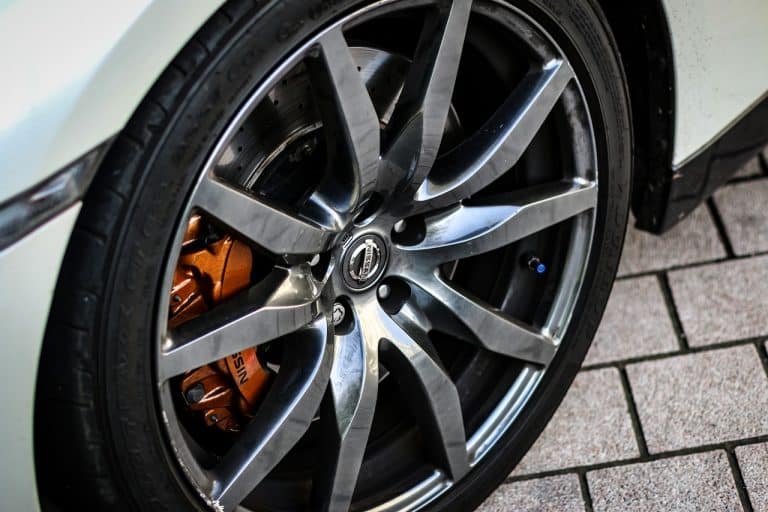
To be fair, the interior is the part that doesn’t suffer as much because it’s the part that you can actually pay attention to. With the exterior things are a bit different. Sure, you’ll be careful, but the car is exposed to the elements, so stone chips, bird poo, dust, and dirt are common. Another common thing you’ll see is damaged wheels.
We can claim to be as careful as precise as possible, but a small misjudgment can cause us to crape the curb. Furthermore, occasionally going over curbs can result in some damage to the flange of the wheel. Being extra careful may help, but so can a little thing called a rim protector, which is what I’ll be talking about today.
What is a tire rim protector?
The name is pretty self-explanatory. A rim protector or a rim guard is a part of the tire responsible for preventing damage to the wheel. Since the flange is the part that’s usually the most extended one, it takes all the beating. The rim guard is there to protect it and prevent or at least minimize the damage.

A rim protector’s task is to protect the flange, so it sits outward. The goal is to take all the damage and keep the wheel looking good as new. As for the specifics, there are two types of guards, and they work differently.
Types of rim protectors
Since there are two types, I’ll cover both separately and explain how they work to protect the wheels.
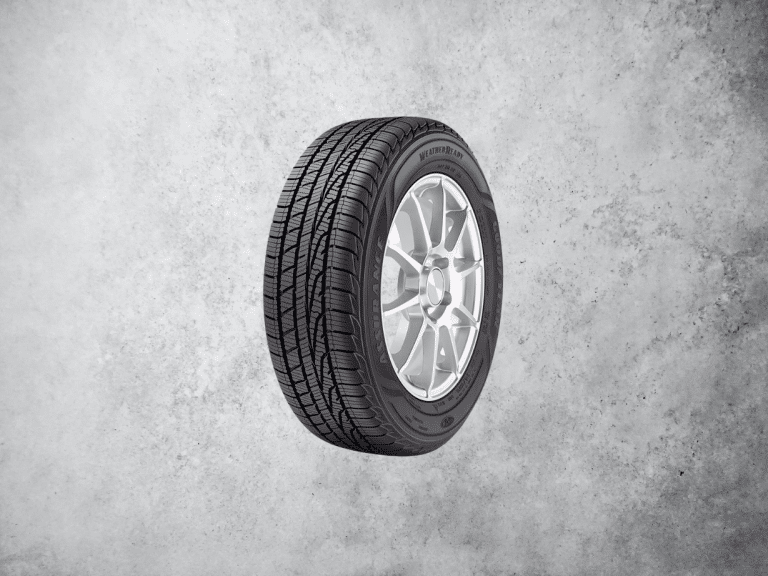
The first type is the one that’s part of the tire. Yes, tires do many things, and there are some that are also designed to help protect the wheels from damage. I say some because not all tires have this feature, so it doesn’t necessarily mean you have it on your set.
Tires that come with rim guards are designed with a special strip on the sidewall that sits just above the wheel flange. It’s a thicker piece that pokes just a bit so that it can take the damage, rather than the wheel itself. For the most part, we see this feature on low profile tires because in those situations the wheels are the most vulnerable to damage. You can also see many off-road capable tires with this strip of rubber working to protect the wheel and also minimize the chances of getting a puncture from sidewall damage.

Manufacturers design these tires with an extra layer of rubber to ensure that the tire is still usable even after some damage to it. Unlike “regular” tires, a bit of damage or scuff on models with a rim guard isn’t an issue. There are exceptions, of course, so make sure you inspect the tires or take your vehicle to an expert to decide if it’s good to continue using it.
There are some exceptions to this, but only in situations when you’ve started modifying things. Stretching tires seems to be a popular trend these days, and it’s one that can render the guard useless. Stretching is the process of putting a narrow tire on a wide wheel, so the sidewall is at an angle. This pushes the guard inward, putting the wheel at risk of damage.
The second type of rim protector is an aftermarket solution, one that all car owners can benefit from. Unlike the tire one, this solution goes on the wheel, and it covers the flange. The material varies from one manufacturer to another, but at the end of the day, you’re most likely looking at some kind of rubber.
There are some advantages to these kinds of protectors, and customizability is one of them. The previous type is the one that’s part of the tire, so the only color you’ll get is the popular tire black. With these, you can get them in multiple colors, with some companies even offering custom ones.

Another advantage to these guards is that you can replace them whenever you want to. Maybe you got bored with the color, or there’s too much damage; all you need to do is remove the old one and install the new. It’s a pretty simple and easy process, so I can understand why they’re so popular.
How do you tell if you have a rim protector?
Let’s say you’re not sure if you have a rum protector or not, so you want to find out. The aftermarket ones can be spotted from a mile away, so there’s no point in discussing those in this section. Instead, let’s discuss the ones integrated into the tires.
Since the goal of the guard is to keep the wheel safe from curbs, you’ll need to look at the tire and wheel and see which one is further outward. If the tire seems like it’s “hovering” like a cover over the flange, then you have a tire with a built-in rim protector. It’s a similar story with off-road tires. As long as there’s part of the sidewall that’s over the wheel, then you have nothing to worry about.
What to do when the rim protector is damaged?
Considering their task, it’s likely that you’ll see some damage to the guards, so what happens then? If you have one of those aftermarket solutions that go on the wheel, just order a new set and be done with it. Damage to the tire rim protector is a bit complicated topic.
Manufacturers design the tires with thicker sidewalls on the lower part right above where the wheel sits. It’s technically a regular tire below but has an extra layer of rubber on it. As far as the damage is concerned, it depends.
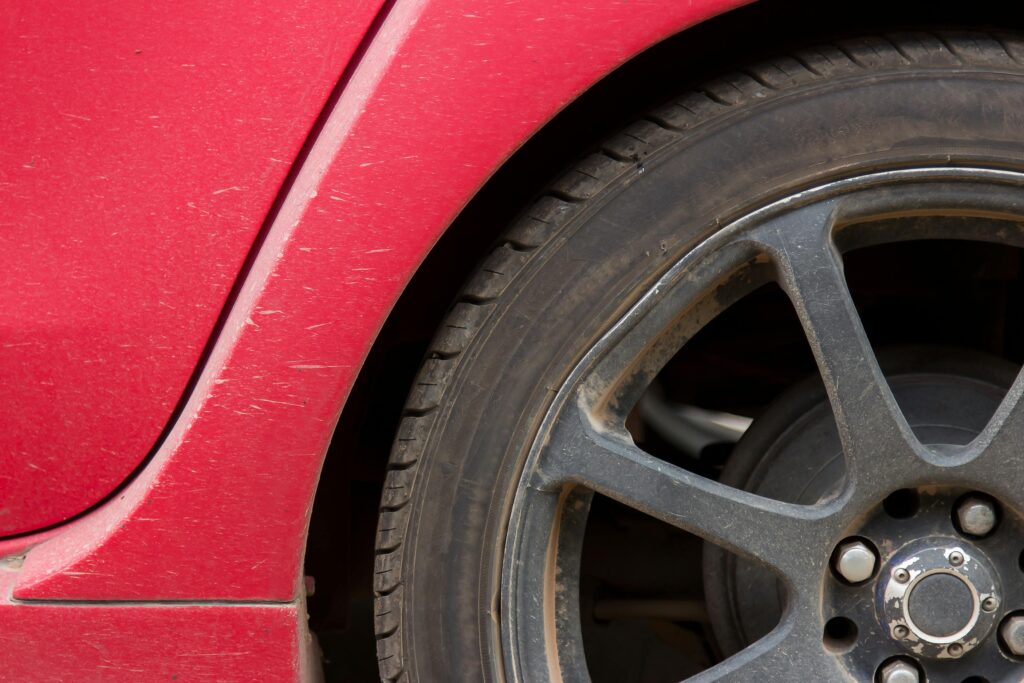
Some surface damage isn’t a massive issue, as long as it’s a tire with a rim guard. Remember, the thicker piece means that there’s more material over the cords. As long as the cords aren’t showing, it’s not too terrible. Yes, there is damage, but it’s not too dangerous. The most important thing to note is that I’m talking about normal daily driving scenarios. Pushing the tires too much on a track may reveal some weaknesses and end up with a blowout.
On the other hand, you may have some more extensive damage and have the cords showing. In this case, the tire is no longer safe to drive, and you should have it replaced.
Some people may not be able to determine whether the damaged tire is good or not, so I’d recommend taking it to a tire shop. People working there are experts and will give you their opinion if you should replace the tire or not.
Can you have both types of rim protectors?
Let’s say you already have tires with a rim protector, and you want to add an aftermarket one to the wheels. This is one of those situations where you can if you’d like to. The tires will already do most of the protecting, but it won’t hurt if you add the others. Maybe there’s a bit more protection in cases where the tire doesn’t manage to guard the flange. The most important thing is that you shouldn’t have any fitment issues, so there’s no harm in doing this.
Conclusion
People that drive their vehicles daily know that they’re exposed to regular wear and tear. There are several damage-prone sections, and the wheel is one of them. Luckily, there is a way to keep them looking shiny, and that’s with the help of rim protectors.
It doesn’t matter if we’re talking about the ones on the tires or the aftermarket solutions, they are designed to offer protection. The most important thing to note is that they aren’t miracle workers, and getting too careless will result in some damage.