Common Tire Myths: Are They Fact or Fiction?

Car ownership isn’t just about putting gas and driving. There are plenty of other aspects that we should pay attention to. Sure, some aren’t necessary and only enthusiasts will pay attention to, but there are those that all car owners should know.
Thanks to the wonders of the internet, we live in an era where you’ll find advice on any topic, including tires. You can find loads of opinions online, but that doesn’t necessarily mean they are correct. Therefore, it’s essential to follow advice from experts only.
The tire industry is riddled with countless opinions or myths, which can be a problem. For the average car owner that doesn’t have extensive knowledge, some of these can even be dangerous.
Today, I’ve compiled the most common tire myths and will explain if there’s any truth to them.
You don’t need winter tires if you have all-season ones
A myth you’ll read or hear is that if you have all-season tires, you don’t need dedicated winter ones for driving in winter. There is some solid reasoning behind this claim, so I’ll put it in the “it depends” category.
If you’ve read some of my reviews on all-season models, you’ll notice that I talk about winter performance. These are tires that can deliver usable to moderately decent winter performance when compared to the dedicated models. They’ll do fine if the temperatures aren’t extremely cold and the snow isn’t too deep. Winter tires, on the other hand, are designed specifically for these conditions, meaning that they can tackle deeper snow easily. Furthermore, there are studdable or studded models, which help with traction on icy surfaces.

Lately, we started to see all-weather tires becoming popular. They are between all-season and winter tires with the most noticeable difference being in improved winter performance.
To address the myth: yes, you can drive with all-season or all-weather tires in winter, as long as the winter is mild. If you need a dependable performer for harsher conditions, you’ll need to look at winter tires.
You don’t need winter tires if you have an AWD or 4WD vehicle
People tend to look at 4WD or AWD vehicles as superior in winter conditions. Yes, there is some truth to that, but that doesn’t mean they can do everything. The tires are the link between the vehicle and the road, so if the tires are struggling to put the power down, the drivetrain won’t be of much help.
It’s a similar story to the previous section. Getting power to all 4 wheels is an advantage, and you can utilize that with a set of all-season tires. With that said, they have limitations and once the conditions become harsher, the tires will struggle. Be mindful of the conditions you’ll be driving in and fit the appropriate set of tires, rather than relying on the drivetrain only.
Inflating tires at the maximum pressure outlined on the sidewall
I’ve seen this a lot on social media, and it’s something that no one should do, ever. The maximum PSI number you’ll see on the sidewall is the maximum pressure a tire should be inflated. It’s not the same as the optimal pressure recommended by the manufacturer. The pressure of the tire is what gives it its shape, so the proper pressure is crucial for the tire to keep its shape and have as wide of a contact patch as possible.
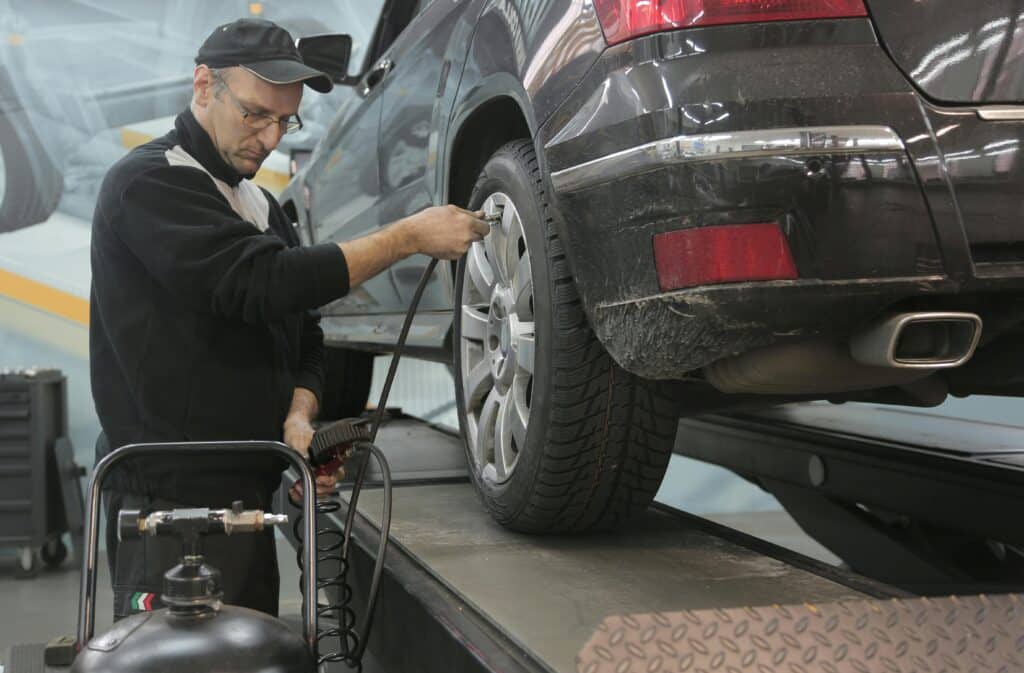
Many things go into deciding the best pressure, and the weight is the most critical one. Too low and the tire will be squished. Too high and the tire will deform and not perform as intended. You can find the optimal pressure in your user manual or on the sticker on the driver side door or sill.
Exceeding the maximum pressure on tires will cause them to explode
Speaking of maximum pressure, there is a myth going around that exceeding the number will cause the tire to explode. It may, but it’s not something we see every day. For example, let’s say that the max psi on your tires is 50. Does that mean they’ll blow at 51? It shouldn’t, but it depends.
A tire is designed to take a lot of beating, so reaching the maximum pressure doesn’t necessarily mean that it will explode instantly. As long as the tire is healthy, it can contain pressures that go well within the 3 digit range. The maximum pressure is the one that the tire is designed to handle in daily driving scenarios, not the point of catastrophe.
Turning the steering wheel while stationary will create flat spots on the front tires
This is another one of those claims that is technically true, but far from something that can destroy your tires. Doing a 3-point turn means that you’ll need to go from one full lock to another, left to right or vice versa. While turning the steering wheel while the vehicle isn’t moving is said to damage the tires and create flat spots.

There is some truth to this, but not in the way that you think. With most vehicles, the front tires hold the weight of the engine, so you have a couple of hundred pounds pushing them to the ground. Turning the steering wheel technically scrapes against the surface and does some damage. The most important thing to note is that throughout the tire’s lifespan, this kind of damage is negligible. As long as you care for your tires and inspect them regularly, they’ll live a long and happy life.
Tires can be used as long as there’s enough tread depth
I talked about this in greater length in my tire age guide, but let me explain the myth. People claim that a tire will be good and perform well as long as there’s enough tread, which is not true. There are two aspects of a tire that provide the performance: rubber compound and tread depth.
The depth of the grooves is what we rely on for aquaplaning resistance or snow performance, but that’s only part of the story. We also have the rubber compound which backs up the performance and allows the tire to handle these conditions. To be specific, as tires age, the rubber isn’t as flexible as it was when new. This leads to reduced performance, especially in non-ideal conditions.
Lower profile tires are better for handling
Enthusiasts love to modify their vehicles and get a better look and often improve driving characteristics. One thing people frequently do is fit a set of low-profile tires with bigger wheels, hoping that they improve the handling. Unfortunately, that’s not how things work.

The misconception here is that the tires are entirely responsible for the handling. Yes, they play a role, but a set of low-profile tires won’t make your old Civic drive like a racecar. The car’s handling characteristics are a combination of the suspension setup, wheels, tires, rack, and a lot more. Modifying one part won’t change too much. With lower profile tires, you may get a bit more responsiveness and less flex in the sidewall. If you want more dynamic handling, you’ll need to modify and upgrade a lot more parts.
You should reinflate the tires only when the TPMS light comes on
The introduction of the TPMS was a massive leap, allowing car owners to know when something’s not right with the tires. This also meant that some people began to rely on it too much. When I say too much, I mean people not checking the tire pressure until they see the light on the dash. I have to point out that I’m talking about the older systems where you only get a light, not the new ones that give you an exact readout of the pressure.
Even TPMS works well, the problem with the older versions is that you won’t see the light on your dashboard immediately. The system works by indicating an issue when the pressure is significantly below the optimal. There is a difference between manufacturers, but for the most part, you’re looking at around 30% drop in pressure. To put that into perspective, if your re pressure is 30 PSI, you’ll see the warning when the tire is around 20. This is far too low and driving for long periods of time at these pressures can lead to uneven wear.
Therefore, you shouldn’t rely on the sensors to reinflate your tires. You can invest in a gauge or a home inflation kit. In a worst-case scenario, you can check the tires at your local gas station regularly. Just make sure they’re at ambient temperature when you check and reinflate them. If you’ve been driving, let them cool down and then do the inspection.
You can tell if a tire is properly inflated by kicking it
TPMS is a modern way of checking tire pressure, but some people want to do it the old-school way – kicking the tires. The idea behind this is to check the pressure without the use of a tool. Unfortunately, it doesn’t work, at least not with cars.
This approach comes from truckers which have a habit of kicking the tires to check the pressure. The main difference is that truck tires usually go into the triple digit pressures and experienced drivers can tell by the sound. I’m not experienced in this, so I’ll assume that’s true. The reason it wouldn’t work on a passenger tire is because the pressures and volume are smaller. There may be a sound difference, but I doubt anyone would notice it.
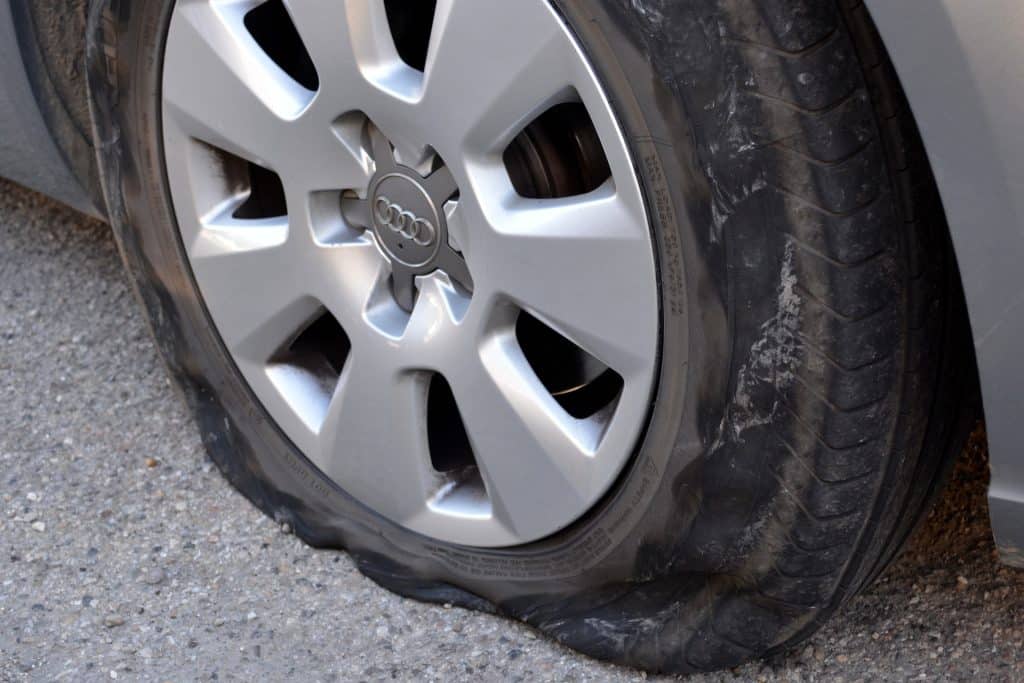
I tried this a while back with my car. Per spec, the pressures in my car are 35 for the front and 38 for the rear tires. I had them inflated and did the kick. I deflated both below the 30 PSI mark and kicked them again and didn’t notice any difference in the thump. Maybe someone with a shaper ear would be able to tell the difference, but I would still recommend relying on a gauge.
Tires are the only reason why your vehicle may vibrate
Whenever someone complains about vibrations in their car, people usually jump to recommend a problem with the tires. Yes, they can be a common reason for this, but they’re not the only culprit.
The car is a complex machine, and every part needs to be in great shape to operate optimally. If the tires are good, and they don’t need to be balanced, you should check out other components. Unfortunately, there are plenty of those that can be the issue. It can be anything from suspension or the steering components to CV axle, bent wheel or even a broken belt in the tire. Regardless of what it may be, your best course of action is to take it to a mechanic.
A repair kit is a complete replacement for a spare tire
One of the many reasons why I’m not a massive fan of newer cars is because most of them don’t have a spare tire. For cost and weight savings, car manufacturers revert to repair kits. They’re smaller, lighter, and designed to plug a puncture. With that said, they cannot deal with any kind of puncture.
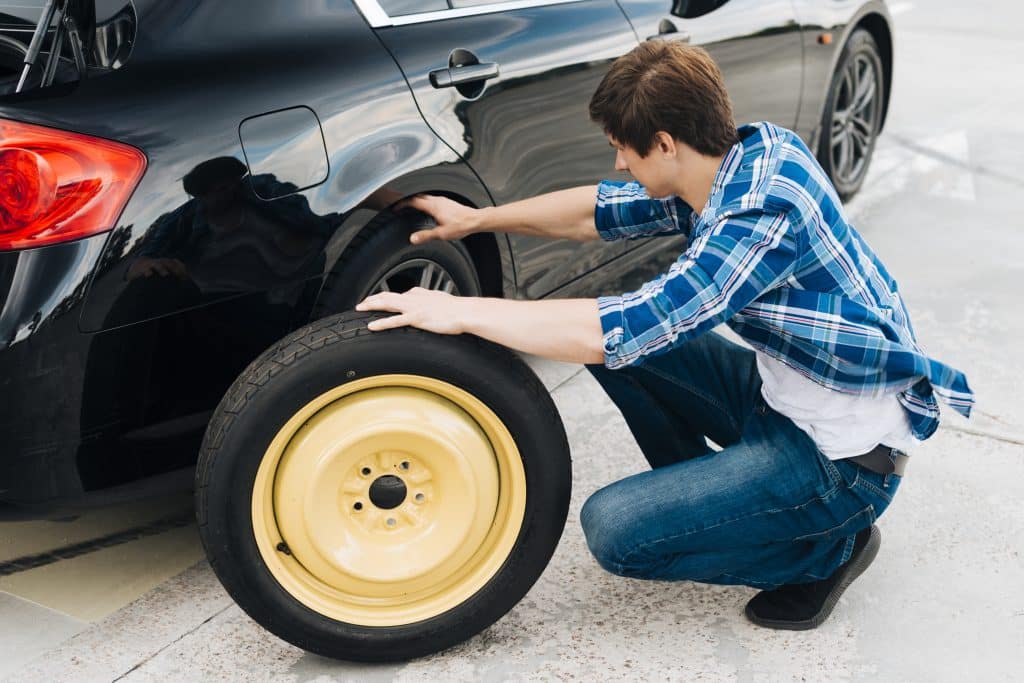
In most cases, going over debris may damage the tire on the tread area, something that the repair kits can take care of or, in most cases. As long as the puncture is small enough, you can be on your way relatively quickly. With that said, larger punctures, sidewall damage or a blowout is something that a repair kit won’t be able to fix.
This is why a spare tire remains the best option. In my opinion, a full-size spare is the best option because you can change it and worry about the puncture whenever you can. The space saver, on the other hand, is limited in performance and longevity, so you won’t have a lot of flexibility. With that said, it’s still better than the kit.
New tires should always go on the front
Getting a new set of tires can be expensive, so people want to save a few dollars. A common suggestion you’ll find is going for the miss-match option. Essentially, it’s getting only two tires and putting them on the driven wheels. Owners of FWD cars usually do this. They put the new tires on the front wheels and leave the old ones in the back. I can understand the logic behind this, but it’s not as safe as you may think.
Taking this approach disturbs the balance of performance between the front and rear wheels. It’s not something you’ll notice on dry roads, but it can be a problem on wet, snow, or ice. The front tires will hold well, but the rears won’t and in certain situations you may end up with oversteer if you go a bit too fast into a corner. Don’t get me wrong, I’m down to drifting a FWD car, but in a safe enough environment. On the public roads, this can be dangerous.
You can drive with winter tires only on the driven wheels
In many ways, this myth is similar to the previous one. People with FWD often have two winter and two summer or all-season tires and rotate them back and forth depending on the season. Not a lot to discuss here that I didn’t mention in the previous section. Miss-matching is a sure way to get an unbalanced performance, so I wouldn’t recommend it.
Winter tires are only for snow and ice
We generally tend to associate winter with a cozy cabin, lots of snow and a fireplace. Well, global warming has taken that from us, leaving us with snow free roads, which is where this next myth comes from. People think that winter tires are designed for snow and ice, so you won’t need them if you’re driving on clear roads in winter. That’s not exactly true.

All-season or all-weather tires will do a pretty good job in colder temperatures, but there is a point where it’s too cold for the rubber to be pliable. A hard tire won’t perform well, something that winter tires won’t have any issues with. Things are even worse when you compare with summer tires, which begin to struggle even above freezing temperatures.
Deflating the tires for improved comfort
I have mentioned this once or twice in some of my reviews on off-road capable tires, but it’s not something I’d recommend practicing regularly. The comfort levels on tires vary depending on multiple aspects, with the flexibility of the sidewall being crucial. A stiffer sidewall sometimes results in a harsher ride, so can reducing the pressure help with that? Not really.
This is one of those myths where you’re risking damage rather than gaining something. If you drop the pressure a bit, the tires will be softer and may absorb bumps better. The problem that may come out of this is bounciness. As for the damage, underinflated tires will result in uneven wear, which will decrease their lifespan.
All-season are better on wet roads than summer tires
I’ll be honest, I was a believer in this in my early days of tinkering with cars, and the logic is solid. All-season tires generally have more sipes, which are one of the several things that help them with traction on damp surfaces. The problem with this is that these are the kind of tires that are designed to work in a wide range of conditions and temperatures. Summer tires, on the other hand, are for warm climates and will perform excellently in dry and wet weather as long as the temperature is above 45 degrees.
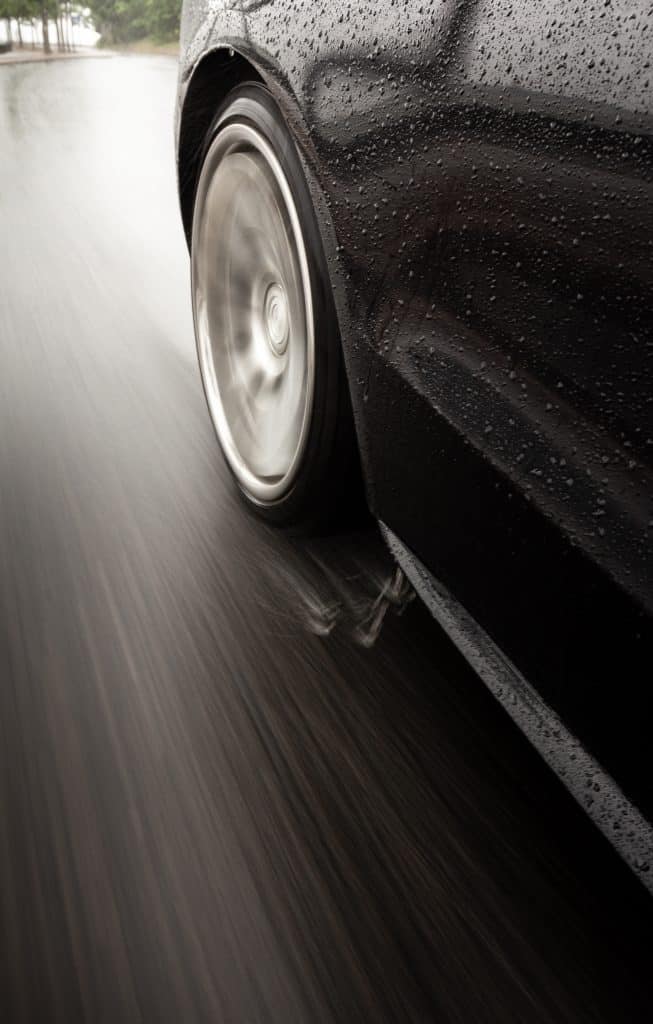
Don’t get me wrong, all-season tires are perfectly safe in all conditions, ranging from hot summer to mild winter. With that said, they’ll never excel in any of those, at least not like dedicated tires would.
You don’t need to replace spare tires
If you own an older vehicle, you probably have a spare tire. It doesn’t matter whether you have a full-sized one or a space saver, the common misconception is that you don’t need to replace it, which isn’t true. The fact that you’re not driving it doesn’t mean that the rubber doesn’t get old, which brings me back again to tire age as something you should consider.
Spare tires rarely get to see any road use and if you’re lucky enough, you’ve never had to take it out. That’s good, but having one in good shape is essential for a situation when you’ll need it. This is why you should check the pressure occasionally and make sure to replace it once it’s too old. With space saver tires, you should also consider how much distance you’ve traveled. Manufacturers specify how many miles you can drive on them, and it doesn’t count in the thousands.
Nitrogen is better than air for your tires
This isn’t exactly a myth, but it’s something that needs to be talked about. The claim is that filling up your tires with nitrogen instead of air is better. This is true, but it doesn’t necessarily mean it’s something you should consider doing.
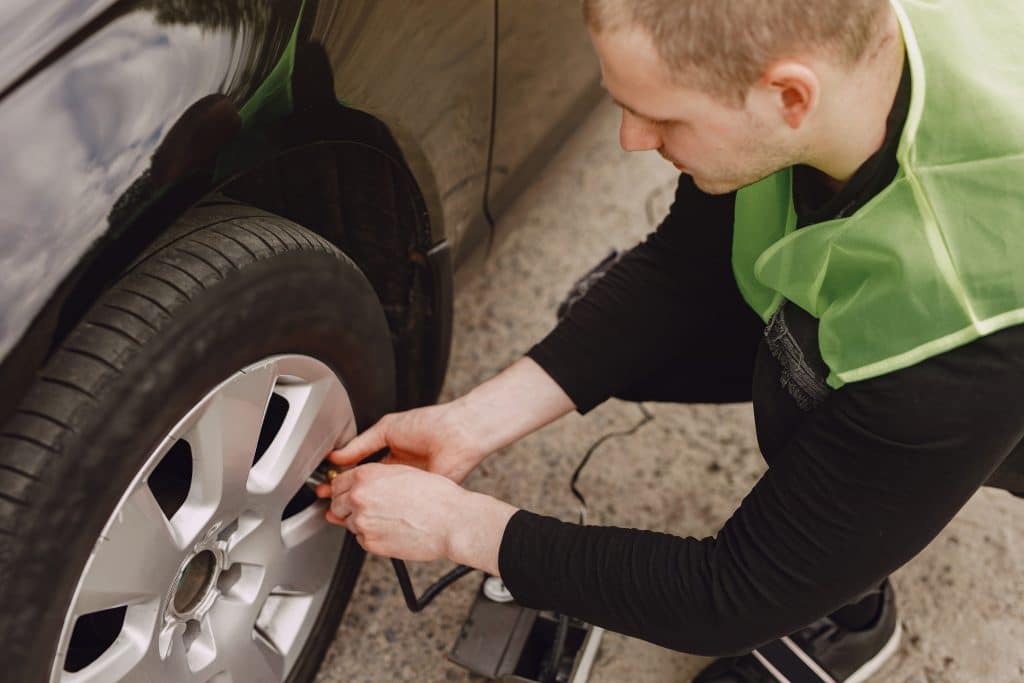
The air we breathe and the one that goes in your tires consists of 78% nitrogen, so how much of a difference will a few more molecules make? It depends on the use case. For daily driving – not a lot. Since the nitrogen molecules are larger, the only advantage is that the pressure loss over time will be slightly reduced. When I say slightly, I mean not enough to justify paying for it. The most important thing to note is that there is no harm. I’m saying that it’s not worth it because you’re not getting a lot, but you’ll be paying more. If that’s not a problem for you, then filling your tires with nitrogen can offer some slight benefits.
Conclusion
You’ll find plenty of tire-related advice online or from the people around you, which is good. The issue is that some of these advice are myths that aren’t exactly true. Some of them are, but don’t offer any significant benefits for the amount of effort or price you’d be paying for them. This is why it’s essential to know which myth is true and which is false.
If you know another one that I haven’t mentioned, please let me know and I’ll include it.