What are Reverse Mount Wheels?

People who are at least a bit curious about cars want to learn as much as possible. Tires don’t get as much attention, but they’re not entirely forgotten. Many tire shops, especially local ones, will allow you to watch the process.
If you’ve ever seen the mounting process, you know that the step starts with the tire going over the wheel. With that said, did you know there is a right and wrong way to do that?
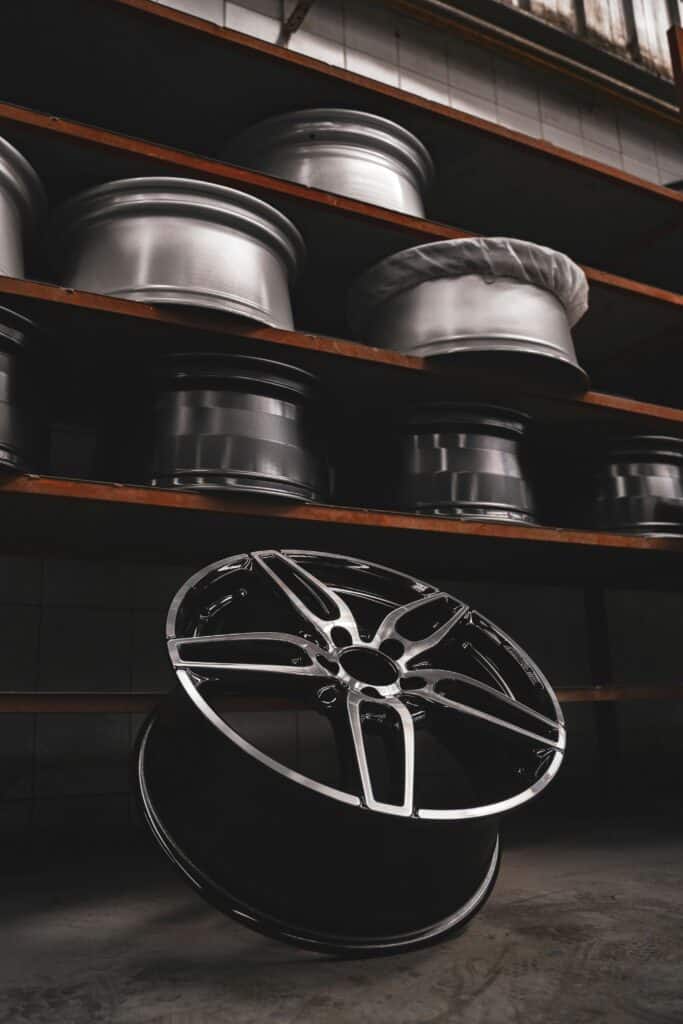
During the installation process, tire technicians must inspect and verify how the tire gets installed. A term you may hear sometimes is reverse mount wheels, which I’ll discuss today.
Why is there a right and wrong side to mouth a tire?
First, I’ll need to discuss wheel design to understand why there is a right and a wrong way to mount a tire. The part we all see is the face, but not many people realize there’s more to it than just that.
A tire isn’t a cylindrical piece of metal or alloy where you slip the tire on and be on your way. The design is what keeps the tire in place and allows you to inflate it without losing air.
To achieve this, each wheel has a section on the front and the back called bead seats. This is where the bead of the tire sits. The tire’s bead features a high-strength steel wire, giving it the strength to remain on the seat without moving. This is also the part that shows the tire’s diameter and the wheel.
Whenever we talk about wheel sizes, we mention the diameter in inches, but that’s not the total diameter. The wheel size is measured at the beat seats because that’s the part where the tire goes. Right next to the seats are the flanges.
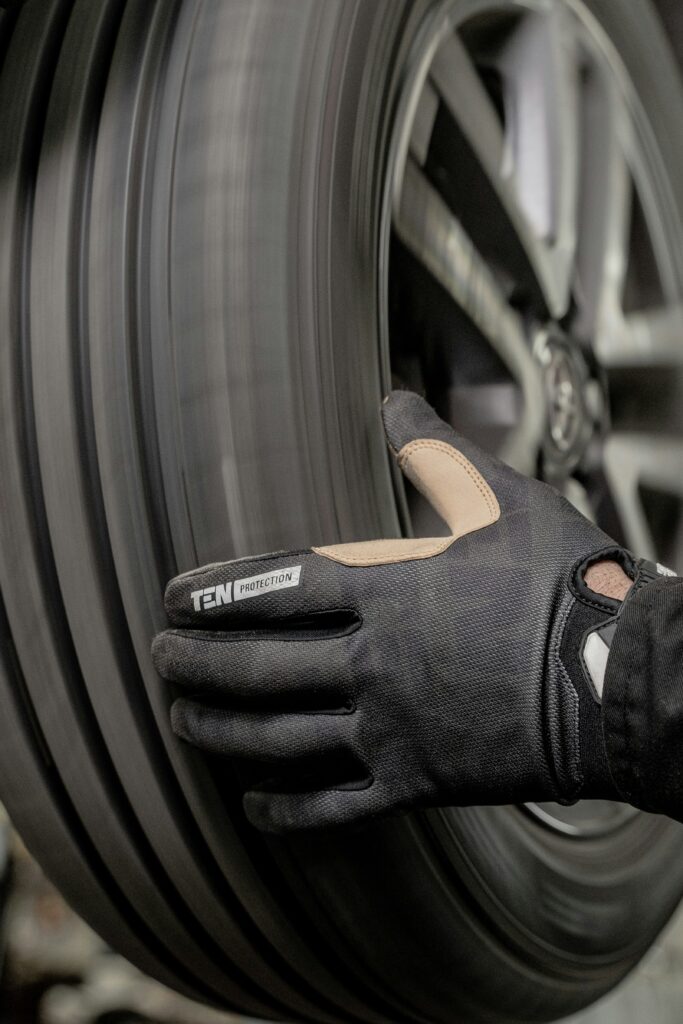
Their main goal is to help the tire sit perfectly and ensure no air leaks. Also, it keeps the tire on the wheel when you’re cornering. The internal pressures push the tire outward, and the flange prevents it from slipping. This is achieved thanks to the rigidness of the tire’s bead, which means it won’t flex enough for the tire to fall over.
This is also the main reason why the total diameter of the wheel is more than the advertised number. The flanges extend a bit over the bead seats, so the overall diameter of an 18-inch wheel, for example, is 19.4 inches.
The drop center is the second crucial part of a wheel’s design that determines which way a tire is mounted. It’s the part of the wheel designed explicitly for a tire to slip over the flange.
Using the previous example, if the total diameter is 1.4 inches more than the advertised one, it means each side has a 7/10 inches of flange. As a result, wheel manufacturers need to compensate for that by making the drop center 7/10 inches lower.
The idea is for the distance between the top of the flange and the lowest point in the drop center to be identical to the tire’s diameter. This ensures that the tire can go on a wheel without stretching it past its normal point.
How can you tell which way the tire needs to be mounted?
Even though most people would take their tires to a shop and have them mounted by a professional, some of them would like to learn, so I’ll explain how to tell what kind of a wheel you have.
The simplest explanation is to look for the drop center. It will always be closer to one side, either the face or the back of the wheel. If it’s closer to the face, it’s a front mounting wheel; if it’s closer to the back, it’s a rear mounting one.

Depending on the width, it may be more or less obvious, but all wheels have them, and it’s a way of telling which way the tire needs to be mounted.
A common question about this on the internet is whether drop centers are in the middle. There isn’t a single manufacturer that makes these kinds of wheels. With the narrower ones, it may seem centered, but in reality, it will be closer to one side rather than the other.
Can you mount a tire from the opposite side?
The drop center exists so that tire shops can mount the tire easily. Trying to put it on the opposite side can lead to two things.
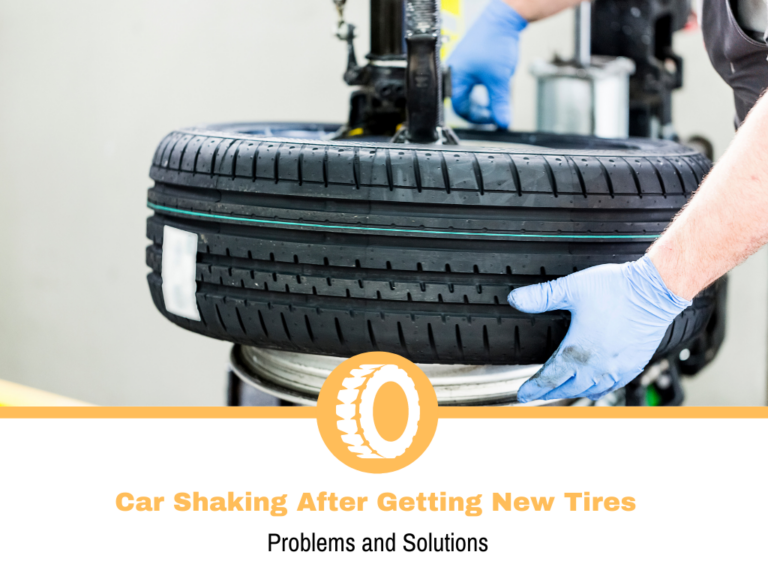
The first one is the most obvious – you won’t be able to mount the tire. When you put it on the machine, you’ll need some persuading to get it over the flange and let the machine do the rest. It’s a safe process for the tire and won’t lead to any kind of damage as long as you know what you’re doing and do not put too much force into it. Mounting the tire from the opposite side won’t yield any results because it won’t be able to go over the flange.

On the other hand, forcing the tire over the flange from the opposite side can lead to damage. As durable and rugged as the beads are, there is a risk of damaging the tire and the wheel. In most cases, the damage to the wheel will be superficial and won’t be a cause for concern. With that said, damaging the bead can lead to loss of pressure or, in some cases, a blowout.
Will my car drive differently if I put reverse mount wheels?
The difference between front and reverse mount wheels is where you mount the tires from, meaning you won’t notice any difference in how your car drives.
At first glance, comparing both will make it seem like the different designs will cause your car to drive differently, but in reality, it will drive the same. You could have reverse mount wheels now, but you don’t know it. You can replace them with front mounting ones, but you won’t be able to tell the difference.
How do I tell if I have reverse mount wheels?
Looking at the wheels won’t give you any hints about how the tires need to be mounted. This means you’ll have 2 options.
The first one is to wait until the next tire change and look at the removal process. You’ll learn how tires are mounted on wheels and you’ll get to see if they’re reverse mounting or not.

The second option is to dig up some online specifications. All wheels are made by some manufacturer, even the stock ones on your car. It’s just a matter of finding the manufacturer and model so that you can look up the specifications.
Can I mismatch the front and reverse mount wheels?
Unlike the problems with mismatched tires, wheels are a bit flexible. You probably noticed different sets of wheels on a car, so it’s doable and not something that will cause damage or put you in danger.
The most important thing to note is that the only combination you should make is different front and rear wheels. I already mentioned that it won’t make any difference if they’re front or rear mounting ones, so the same rule applies here.

Even though there isn’t a difference, you shouldn’t have different left and right wheels. There will probably be a weight difference, which you don’t want in your car as it offsets the balance.
Conclusion
Rear mounting wheels are just like the front mounting ones. They do the job identically the same, so the only difference is which way the tires go on. If you have the equipment and skills to mount your tires at home, make sure you don’t mix this up to avoid any potential damage to your tires.