Should you shave tires to match tread depth?

For most people, the process of buying tires includes an entire set. This is because all 4 tires usually wear down at a similar rate, so they’re due for a replacement in more or less similar time. Unfortunately, things aren’t always ideal, and some of us have been in a situation where we need to replace only one tire.
In most cases, people go for replacing only one tire because the rest are still good, meaning they have enough tread and aren’t too old. You probably think that replacing the tire is all you need to do and be on your way. While it seems that way, there is one thing you’ll need to consider.
I discussed mismatching tires a while back and covered a bit of today’s subject. Replacing one tire, especially on a vehicle with 4WD or AWD, can lead to problems. It can also put additional strain on the rest of the components, especially the differentials, causing extensive damage.
This is where shaving comes into play, but the real question is: should you consider it if you want to match the tread depth?
Where Does the Idea Come From?
The idea behind shaving a tire comes from the fact that it’s not recommended to have mismatched tires. The biggest problem with this comes on vehicles that have 4 driven wheels. There are more components, and mismatching the tires puts additional strain on them. It’s a similar story with FWD or RWD vehicles, but with only one differential, it may not be as catastrophic. Keep in mind, even with these vehicles, you can cause damage from the additional strain.
As far as the shaving process is concerned, it’s just as it sounds. Taking a new tire and removing a layer of rubber is something that tire shops did in the past. This was because tires weren’t as round as they are today, so manufacturers made them with thicker rubber so that there was enough to be shaved off it. Today, tires are much closer to being perfect, so a few weights are doing a good enough job to eliminate vibrations.

In this modern era, tire shaving is used mostly in budget-oriented racing series. Unlike the more expensive ones, drivers need to have semi-slick tires, and one option to get those is to get road-legal tires and shave them. This also keeps the weight down, which can be essential in racing.
Looking at both aspects, it’s becoming clear where the idea comes from. Shaving a tire scrapes a layer of rubber, meaning if you have one new tire with full tread, you’ll want to get it as close as possible to the other 3.
Should You Shave Tires to Match Tread Depth?
Now it’s time to answer the big question: should you do it or not? There are multiple things to consider before deciding if you should or not. Technically, a tire technician would explain this and advise you on the best course of action, but if you don’t get that, let’s go over a few things.
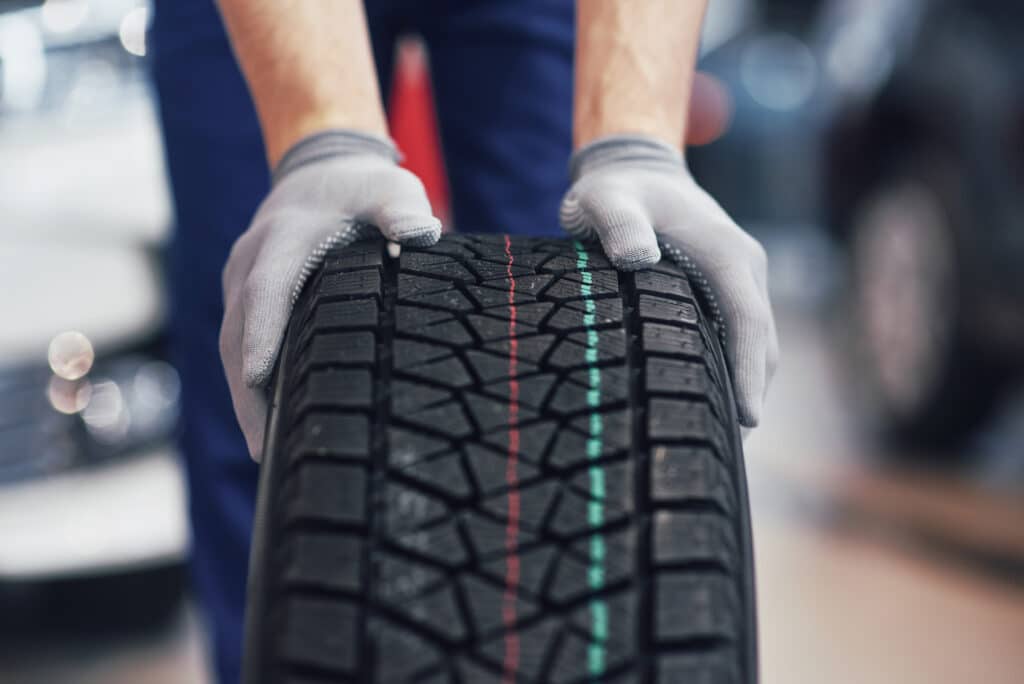
The first thing you should consider is how worn the rest of the tires are. Most tires come with 10/32 or 11/32 inches of tread when new, so that’s the starting point. If your tires are close to these numbers, you probably won’t have to worry too much about it. Tires don’t wear at precisely the same rate, so there might be some minor differences. These aren’t enough to cause any massive harm, so most tire shops will tell you to leave them as they are.
On the other hand, having a set at 5/32 or 6/32 means you’ll need to consider shaving them. The difference between the new and the old tires is significant, and it’s that difference that may put additional strain on the drivetrain.

To be fair, if you’re in this kind of situation, you might want to consider replacing all tires. It is a bit premature than anticipated, but depending on how much you drive, you may need to replace them soon, so you might as well get the job done immediately. Naturally, you won’t have to worry about shaving a tire in this case.
The second thing you should consider is the drivetrain. If your vehicle has 4 driven wheels, shaving is the best course of action to eliminate potential damage. With 2-wheel drive, it may not be as much of a problem, but you might still consider it. Even if the new tire isn’t on any of the driven wheels, there’ll still be some strain on the suspension components.
Should You Consider a Used Tire?
Some people claim that a used tire can be a better option, at least financially. Used tires are more affordable, plus you won’t have to pay for the shaving, so the logic is good, at least in theory. In practice, things are much more complicated.
The first problem with this is that you’ll need to look for the same model as the other 3 tires you have. There are many reasons for this, but the two most important ones are balanced performance and rolling resistance. A tire with a different pattern on one corner means it may have more or less grip and traction. It disrupts the balance, and you’ll notice that your vehicle isn’t driving as it was before.
Another aspect of this is the rolling resistance. Each tire model has a different rolling resistance, so if you have 1 tire with more or less, it will cause an imbalance. This is an aspect you’ll want to avoid because your vehicle will drive differently, and the drivetrain will experience imbalanced resistance, putting more strain than necessary.
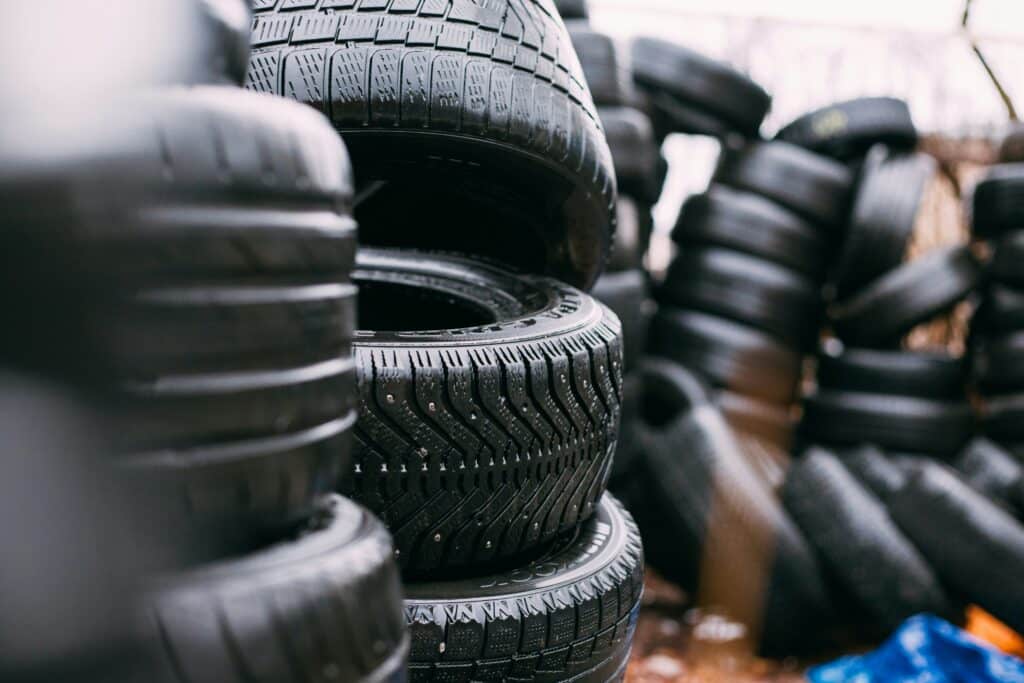
Let’s say you manage to find the same model, which is good. The next problem is the tread depth. You’ll need to aim for one that’s as close as possible to the other tires on your vehicle. You’ll also need to look for someone who will sell you only 1 tire. You should also consider the age of the tire. I’ve explained that older tires tend to lose performance, so you may find the tire you’re looking for, but it may be too old to be safe for driving.
All of these aspects are ones that you’ll need to combine in order to find that “perfect” used tire. While it is possible to find the tire, the chances aren’t too great. Consider this: you’ll need the same model with similar tread depth, which isn’t too old and comes in the same size as the tire you’re looking to replace. You may find it quickly if you’re lucky enough; if not, you’ll have a parked car for a long time.
One thing you should keep in mind with used tires is their condition. While the tread and the production date may be fine, the tire may not have been stored properly, so the condition of the rubber may not be in the best shape possible.
Can You Shave a Tire Yourself?
Wanting to save a few dollars may put you in a situation where you’ll want to consider shaving the new tire yourself. While the process isn’t the most complicated, it won’t save you a lot. In reality, it will end up costing you more.
One option is to get the tire shaving machine, which costs much more than you’ll pay at the mechanic shop. Sure, the machine will remain in your possession, but you’ll need to shave a lot of tires to pay the machine off.
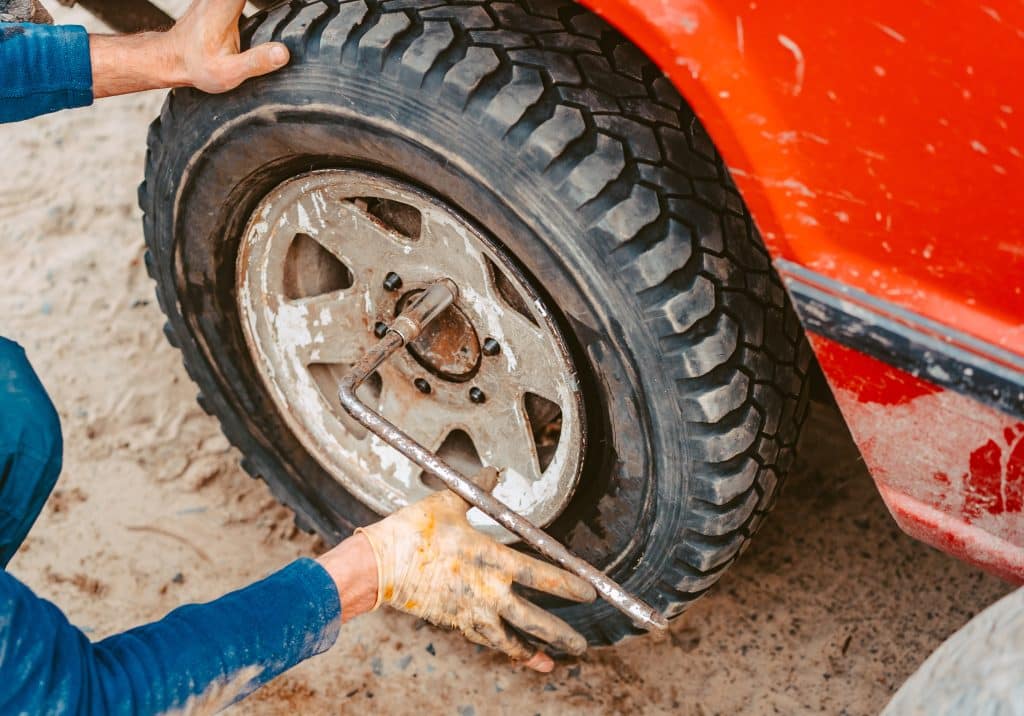
The second aspect is the experience. It’s not like the machines are overly complicated to use, but the process has some finesse. The learning curve isn’t too steep, but a tire technician already has all the needed experience.
If this is expensive, you can take some DIY routes to shave a tire. This is something that I wouldn’t recommend for various reasons. Most of these tips include using homemade tools to shave the tires. The problem with this approach is that none of them are as precise as the machine to get the job done. This puts you in a situation where you can damage the tire beyond repair, costing you even more because you’ll need to buy another one.
Conclusion
Finding yourself in a situation where you damaged a tire and need to replace only one means you’ll need to consider other things. The most important one is the difference in tread depth between the new and the old ones.
This is where tire shaving comes into play, and it’s something that people need to consider. Having a big tread depth difference means you may put unnecessary strain on the drivetrain, something you’ll want to avoid.
With that said, there are cases where it may not be necessary. If you’re unsure, you can always consult your local tire shop and see what the best course of action is.